Accessible lab discovery for all students in UC Davis
FindMyLab is a student-focused research lab directory built through AggieWorks, a student-run organization creating technology for students. It allows users to explore active labs, filter opportunities by field, and will soon offer personalized matches based on their interests. The goal is to make research more accessible and reduce barriers for students at UC Davis.
OPPORTUNITY
Students and staff at UC Davis avoid the parking app, showing how lost trust hurts engagement and revenue.
At schools like UC Davis, students and staff are actively avoiding the campus parking app, with some choosing to risk parking tickets rather than use it for payment. With over 10,000 students on campus and daily parking fees, this represents significant lost revenue and compliance issues. Reviews point to a breakdown in trust, citing issues with reliability and user experience.
Research
I wanted to see why users would rather risk a parking ticket rather than using the app.
For this project, I set out to understand how successful platforms build trust within their communities. I began by examining the factors that cause users to abandon apps. At first, I assumed the issue was just an unpolished UI. After reviewing more than 50 app reviews, however, it became clear that the real problem was a breakdown in trust. Here are the key insights that emerged:
Trust Crisis
The app’s unpolished design makes it feel untrustworthy and unprofessional. Users avoid relying on it, with some choosing a $30 parking ticket over the risk of failure. Entering card details feels unsafe, reducing confidence in payments. Negative reviews reinforce distrust, discouraging others from using the app.
Usability Issues
An outdated UI discourages use and lowers engagement. Poor labeling and unclear error messages make it hard to recover from mistakes. The absence of Apple Pay breaks familiar payment patterns and adds friction.
Competitive Analysis
I analyzed ParkMobile, Amazon, and Uber to understand how products build user trust. ParkMobile, a direct competitor, uses a more intuitive UI, clear labeling, EV parking options, and convenient payments like Apple Pay and Google Pay. Uber and Amazon demonstrate how seamless payment flows increase confidence. These insights can improve AMP Park’s usability, reliability, and trust.
HMW Statement
How might we rebuild user trust to create a parking app that students feel comfortable using instead of actively avoiding?
Strategy
The Trust Framework
Early on, I considered two approaches: adding incentives like discounts or rewards to bring users back, and redesigning the interface to simplify layouts and hide complexity. While these methods could improve the app, they did not address the core issue. Consumers had lost trust in its reliability. This insight led me to apply Ken Thompson’s Trust Framework, focusing on Ability, Benevolence, and Integrity.
Design Decisions
Parking Workflow
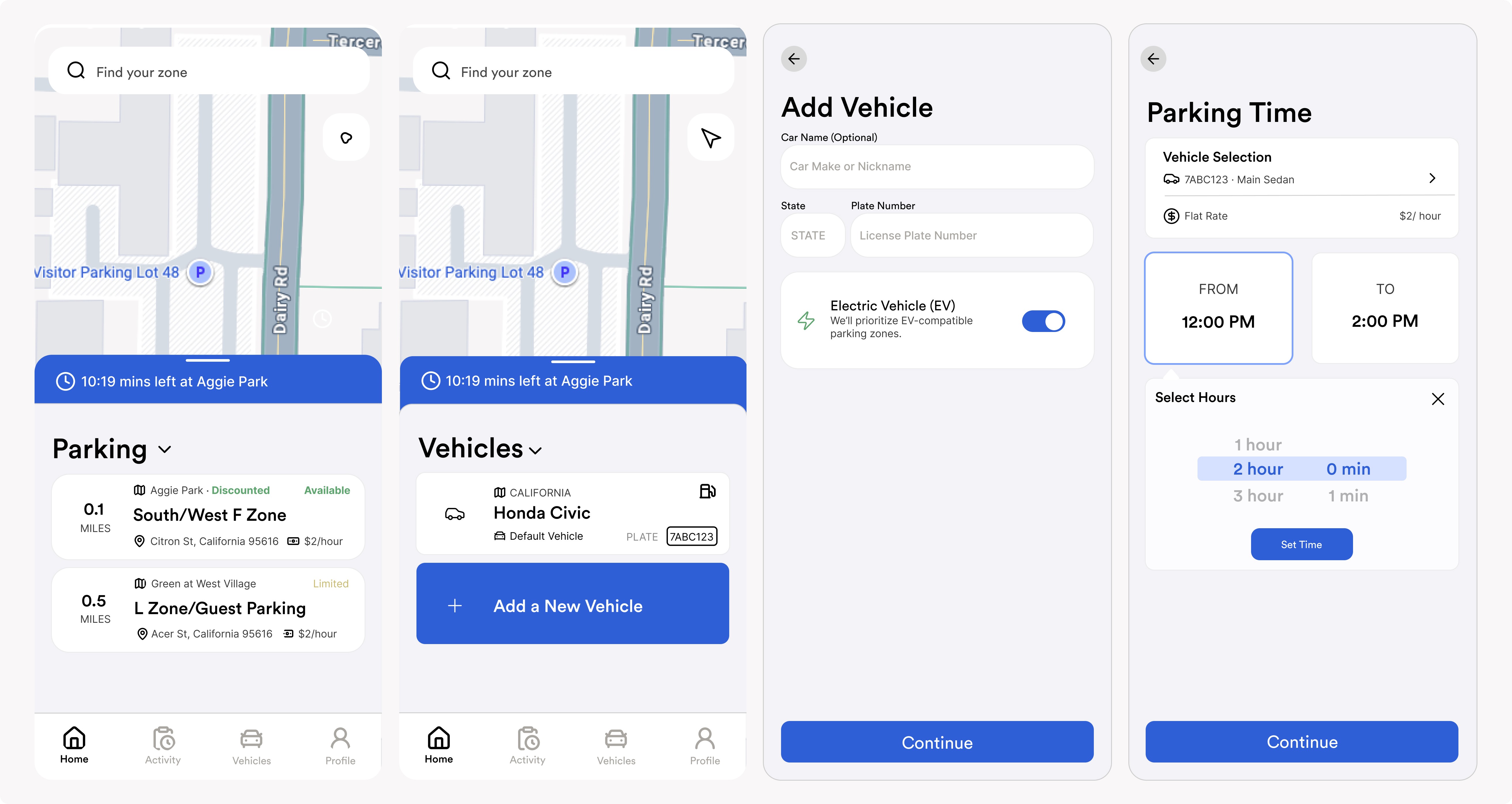
I introduced a slide-up bar that guides users through payment, starting with selecting a zone, adding a vehicle if needed, confirming time, and paying. A dropdown lets users quickly switch between available spots, active parking, and favorites.
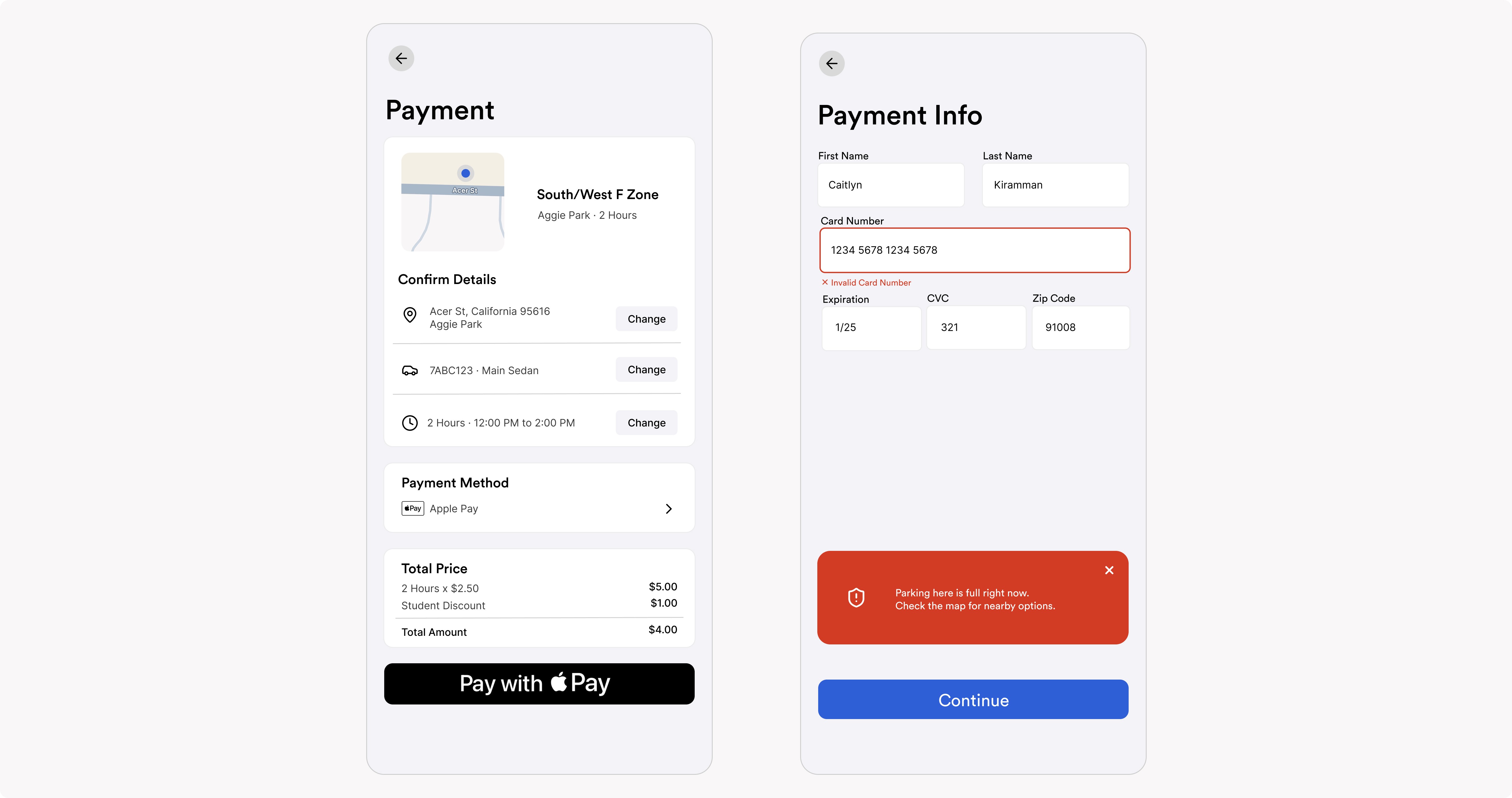
A Trust First Payment
Apple Pay and Google Pay were made the primary payment methods to reduce friction and build trust. Error codes were later added in mid-fidelity to improve clarity and prevent confusion.
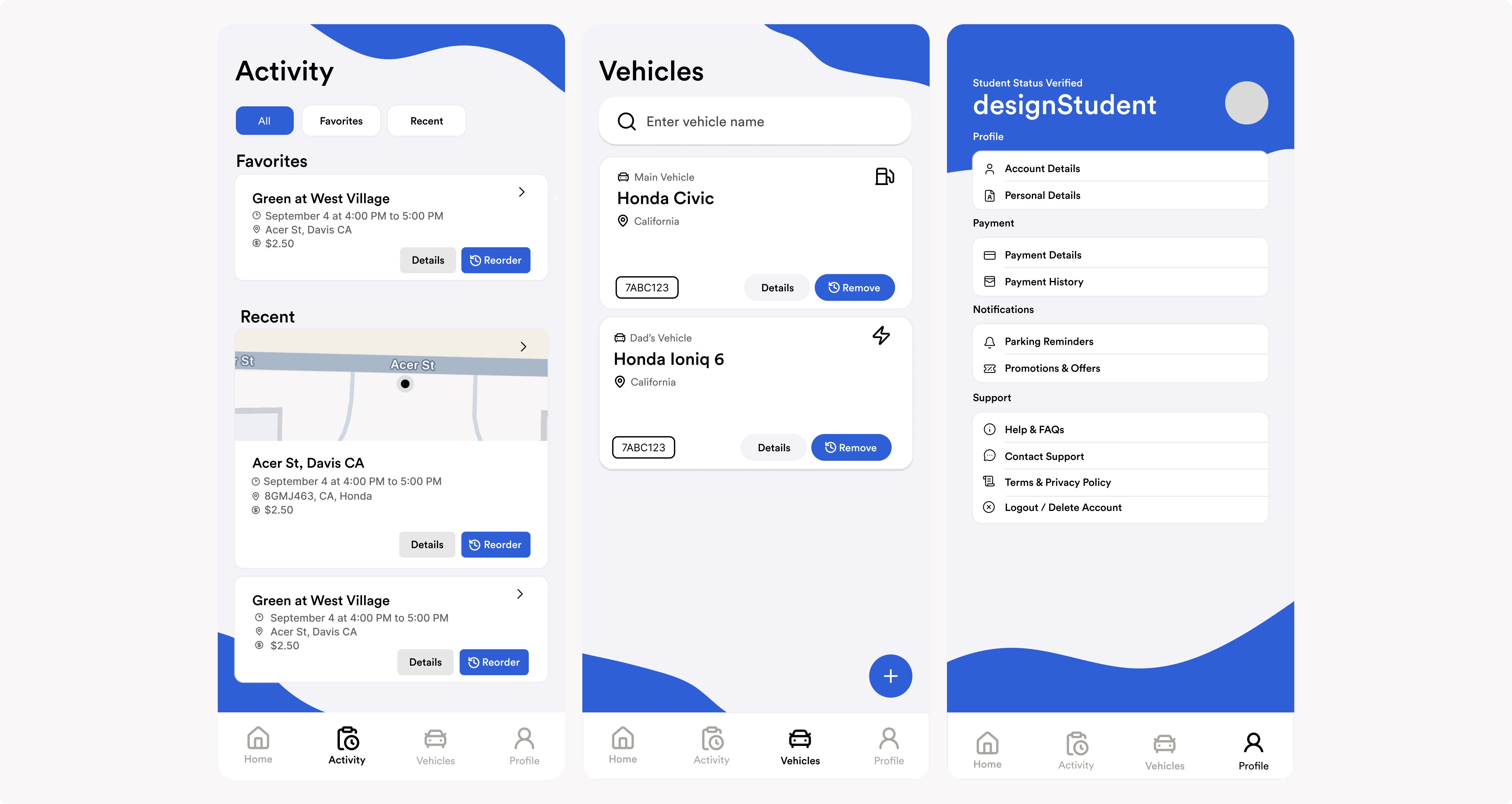
General Improvements to UI and Navigation
I adopted familiar design patterns from apps like Airbnb, Spotify, Google Maps, and Instagram to improve overall usability. The Hamburger Menu was redesigned into Home Navigation for easier access, the History tab became Activity to help users filter past parking transactions, and the Vehicle and Profile pages were updated from a cramped list format to card-based layouts with better grouping for clearer hierarchy.
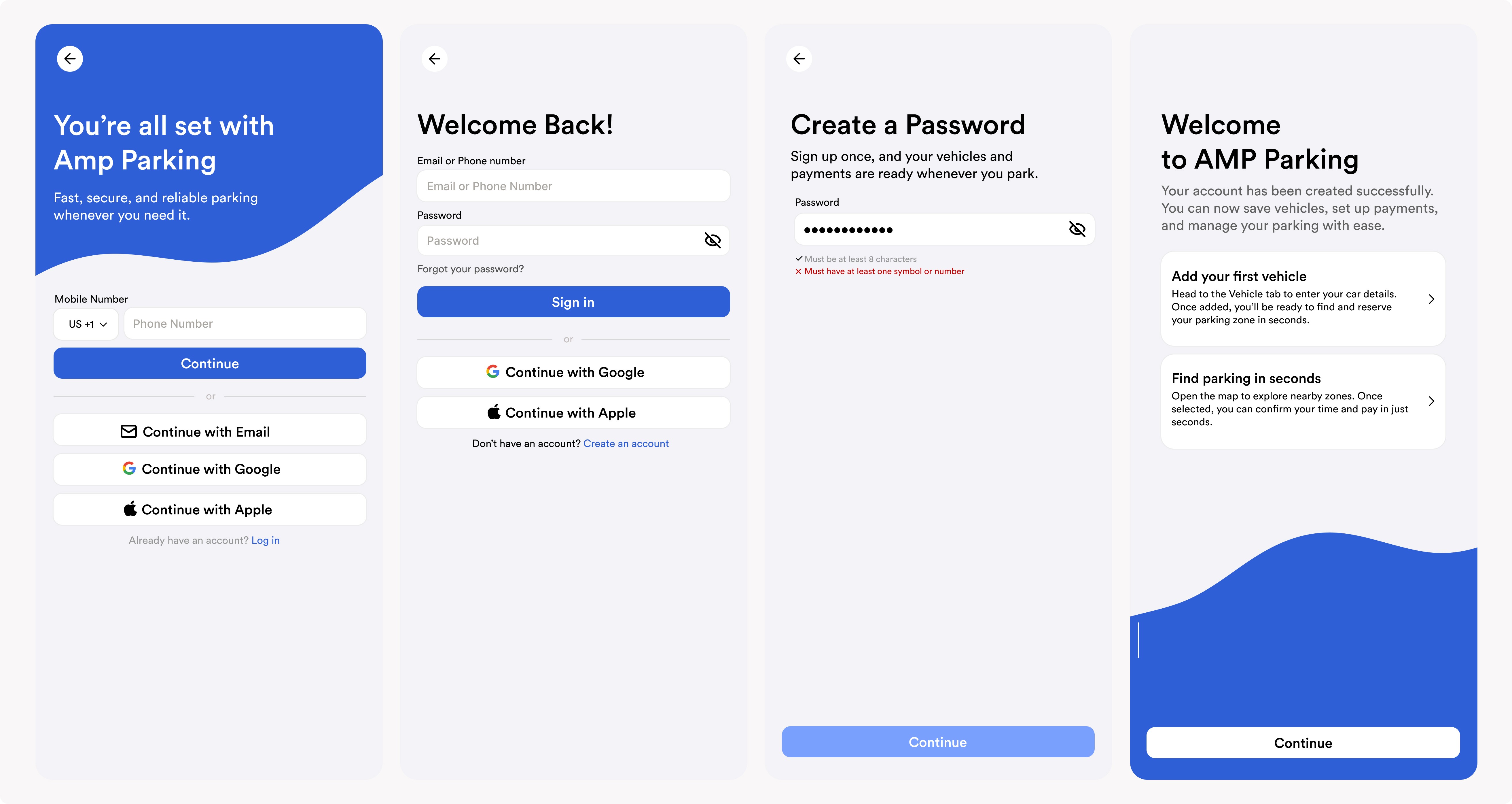
More Credible First Impression
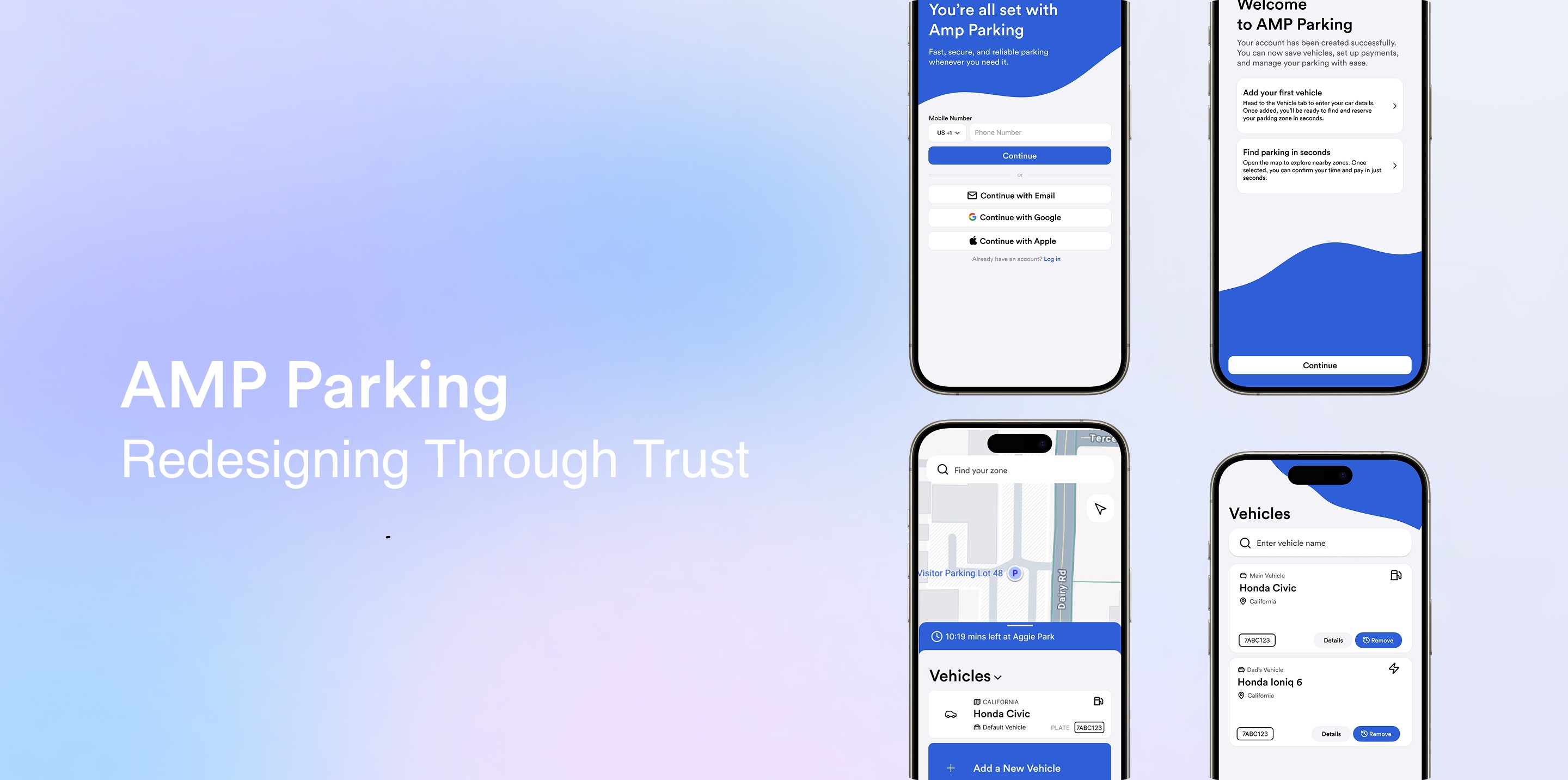
I redesigned onboarding to create a stronger first impression and reduce early abandonment. Sign-up was simplified, labels and requirements were clarified, and step-by-step guidance was added to help users get started confidently.
Low-Fidelity Draft
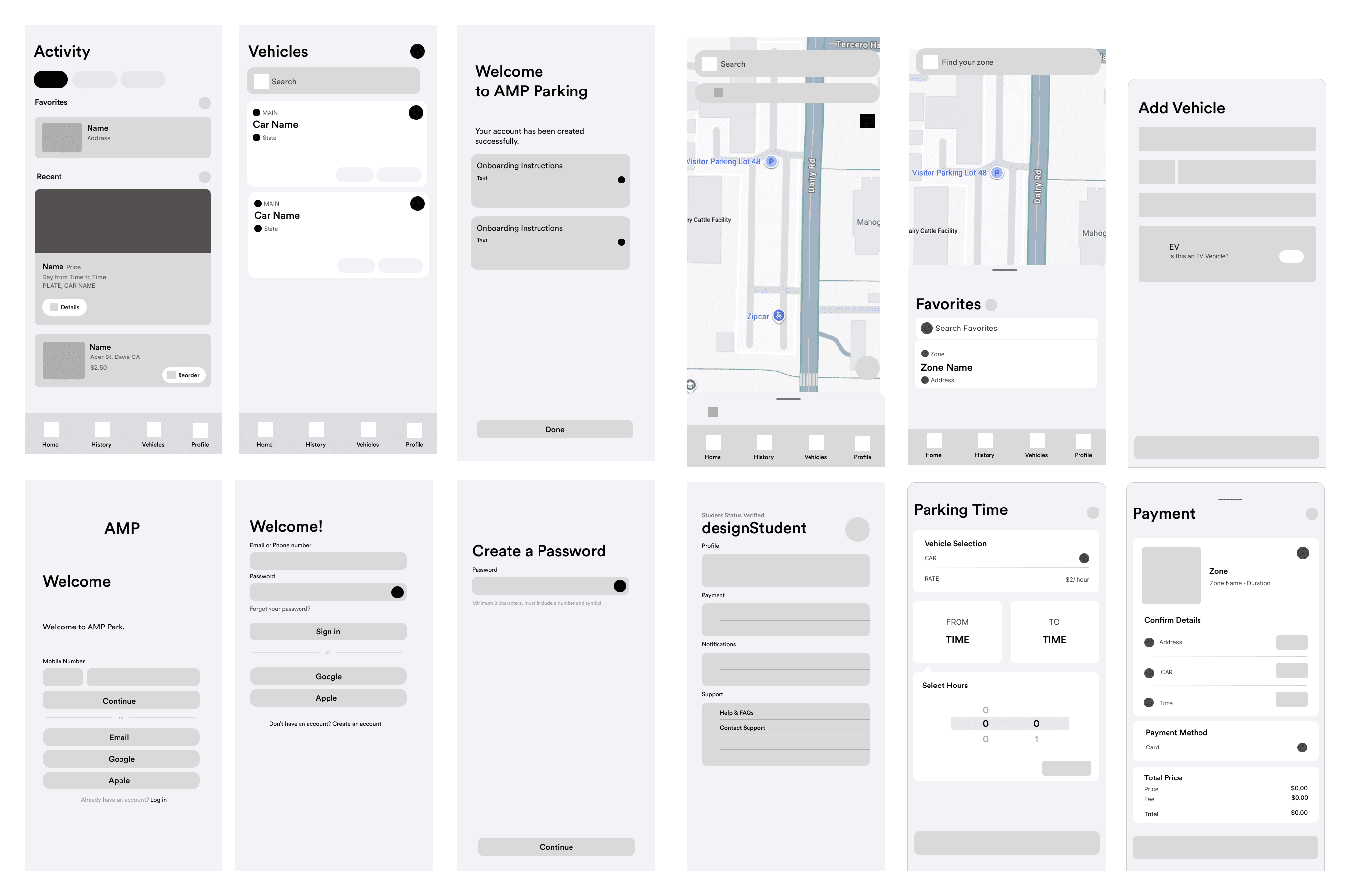
I created low-fidelity wireframes to explore ways to rebuild user trust through design. Early sketches focused on simplifying layouts, clarifying error states, and improving payment flows to address usability and reliability concerns. These prototypes helped visualize how transparency, consistency, and modern patterns could restore confidence before refining the visual design.
Reflection
Key Learnings & Growth
I learned how to design for a wide range of UC Davis students, from tech novices to frequent app users, even with limited testing resources. I discovered the power of visual design in building trust through Ken Thompson's framework, and how to transform user complaints and critiques into actionable, user-centered solutions.
With more time, I’d expand testing to include more diverse users, run a thorough accessibility audit, and add animations and interactive touches to give the app more character and strengthen its brand.
Strengthening trust with users through Visual Design
october 1, 2025